
The LA Bowl, a lower-tier college football postseason game, has ceased operations.
While its closure was rumored for weeks, the game said no decision had been made until now
The LA Bowl was known for its unique naming rights, once being named after comedian Jimmy Kimmel.
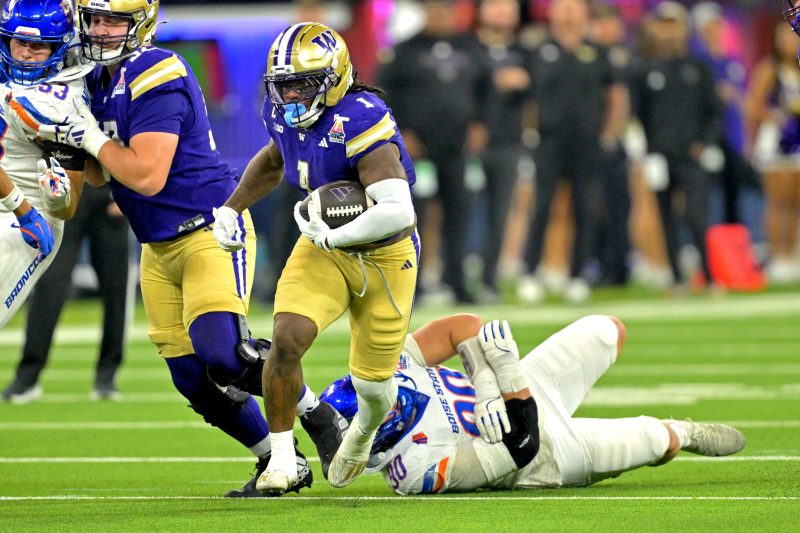
College football is losing another lower-tier postseason bowl game. The LA Bowl confirmed Wednesday, Jan. 14 that it will cease operations after Washington beat Boise State, 38-10, in its final game last month at SoFi Stadium in Inglewood, California.
While the game’s demise was rumored for the past several weeks, its management said no decision had been made until recently.
“After five great years, the LA Bowl at SoFi Stadium has come to an end,” the game’s management said in a statement.’ The event finished on a high note on December 13, 2025, with the Washington Huskies hoisting the final trophy in a victory over the Boise State Broncos. We thank all the fans and partners who supported this innovative bowl game.”
What the LA Bowl’s decision means
The decision comes as bowl games are trying to find their way in the evolving industry of college football. The 12-team College Football Playoff makes the lower-tier games less relevant for some teams such as Notre Dame, which declined to play in one this postseason after finishing the season 10-2. Iowa State and Kansas State also declined to play in bowl games, drawing a $500,000 fine from the Big 12 Conference for not helping the league fulfill its bowl game contracts.
The closing of a bowl game is nothing new, however. Bowl games have come and gone throughout college football history, each making a decision based on their market and business model. In the last decade, the Poinsettia Bowl in San Diego and Redbox Bowl in Santa Clara, California have ceased operations. The Bahamas Bowl owned by ESPN Events was replaced by another game in Frisco, Texas – The Xbox Bowl.
There were 41 bowl games this past season in major college football, including six that are part of the playoff. Of those 41, 16 are owned by ESPN Events, a division of ESPN. Almost all the rest are owned by local nonprofit organizations except for three that are owned by pro teams or their owners. The LA Bowl was owned by Hollywood Park and Los Angeles Rams owner Stan Kroenke. The New York Yankees own the Pinstripe Bowl in New York. The Detroit Lions own the GameAbove Sports Bowl in Detroit.
What set the LA Bowl apart
In the LA Bowl’s case, the announced attendance for its last game was 23,269, well short of the game’s record of 32,780 in 2023, when it hosted the hometown UCLA Bruins in a stadium that seats 70,000. The game was supposed to start in 2020 but was canceled then because of the COVID-19 pandemic.
Since then it was known for its colorful sideshows and unusual reverse-naming rights sponsorships, which included being named after a comedian and hosted by former NFL tight end Rob Gronkowski.
It was called the Jimmy Kimmel LA Bowl back in 2021, the first bowl game to be named after a person and not a weed eater, agricultural product or other corporate sponsor. (That doesn’t count the old John Hancock Bowl in El Paso, which was named after an insurance company sponsor and not the American Revolution leader with the big signature.) This year it was called the Bucked Up LA Bowl hosted by Gronk, named after a fitness supplement company.
But neither Kimmel nor Gronkowski paid to be in the game’s name, unlike other title or presenting sponsors for bowl games, as confirmed by the LA Bowl. It was to get attention in a crowded bowl field. And it worked to some degree until it didn’t, especially after the old Pac-12 Conference fell apart and left it without a western power conference as a future partner.
Follow reporter Brent Schrotenboer @Schrotenboer. Email: bschrotenb@usatoday.com