
MILAN — Mia Manganello had been envisioning this moment for a year.
Once she wrapped her head around what her coach had in mind, that is.
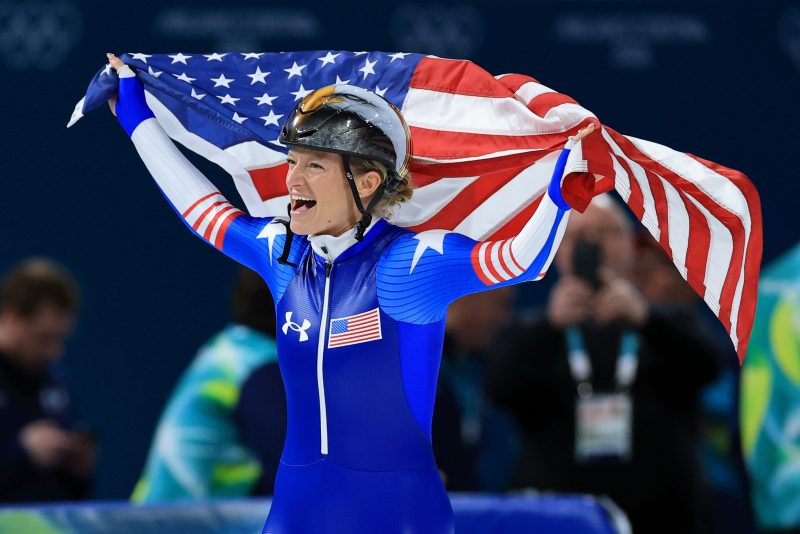
Manganello ended her speedskating career with a bronze in the women’s mass start Saturday, Feb. 21, the first individual medal in three Olympics for the 36-year-old. She had dedicated herself to the event this season, after coach Gabriel Girard said he thought it was her best chance for an individual medal.
‘It was a leap of faith for me,’ said Manganello, who also has a bronze from the team pursuit in 2018. ‘To cross the line with a medal, I’m really proud. But I’m really happy for my coach, as well, that he had this vision for me and I was able to pull it through.’
Manganello’s bronze was the first for the U.S. women in long-track at the 2026 Milano Cortina Olympics after fourth-place finishes in the 1,000 meters, 1,500 meters and team pursuit and a fifth in the 500 meters.
It also gave the U.S. team four medals, their most since also winning four at the 2010 Olympics in Vancouver.
‘This is definitely a win for the entire team,’ Manganello said. ‘I’ve been a head case probably all year. It was a lot of weight that I put on this event, and you have downs and you have highs, but it’s really my teammates and my family that got in here. And so, to me, it is a win for them just as much as it is for me.’
Speedskaters, at least U.S. ones, usually do events at multiple distances. But knowing this was going to be her last season, her last Olympics, Girard told Manganello she should focus on the mass start.
The mass start is a 16-lap pack race, with sprints every fourth lap, and is similar to the Tour de France cycling race. It requires strategy as well as speed, knowing when to pursue other skaters who make breakaways, knowing when to make your move.
Despite her initial hesitation, Manganello had quick success this season. She won the first World Cup, then made the podium three other times. She wound up winning the season title by a single point over Marijke Groenewoud of the Netherlands.
But nothing is a given with the mass start, especially when the Olympic final has only 16 skaters, smaller than the fields at World Cup races.
Manganello got a boost when Greta Myers, who is also her teammate in team pursuit, made the final. That meant Manganello had help chasing down breakaways and establishing her position for the final sprint.
Myers moved to the front of the pack late in the race, allowing Manganello to conserve energy. On the final lap, she burst forward and skated furiously to the finish.
‘Greta skated out of her mind. It was the best I’ve ever seen her race a mass start. She raced with confidence, she raced with determination and a goal. And that goal was to get me a medal,’ Manganello said, tears filling her eyes.
Myers was happy to do it. These are the first Olympics for the 21-year-old, so this was a valuable learning experience.
But she also knew what it meant to Manganello to get a medal in her last race.
‘There’s no one more deserving than Mia, so I’m just so proud,’ Myers said.
Manganello let out a scream that echoed through the Milan Speed Skating Stadium when she crossed the finish line. She beamed as she climbed onto the medals podium, and cradled her medal as she met with reporters afterward.
Asked what she’ll do now that her speedskating career is over, Manganello said she’s going to go pick up her dog, which has been staying with her parents in Florida. Go to the beach.
And enjoy this medal.
‘I’m just going to lay with my pretty medal in bed for a while,’ she said.