
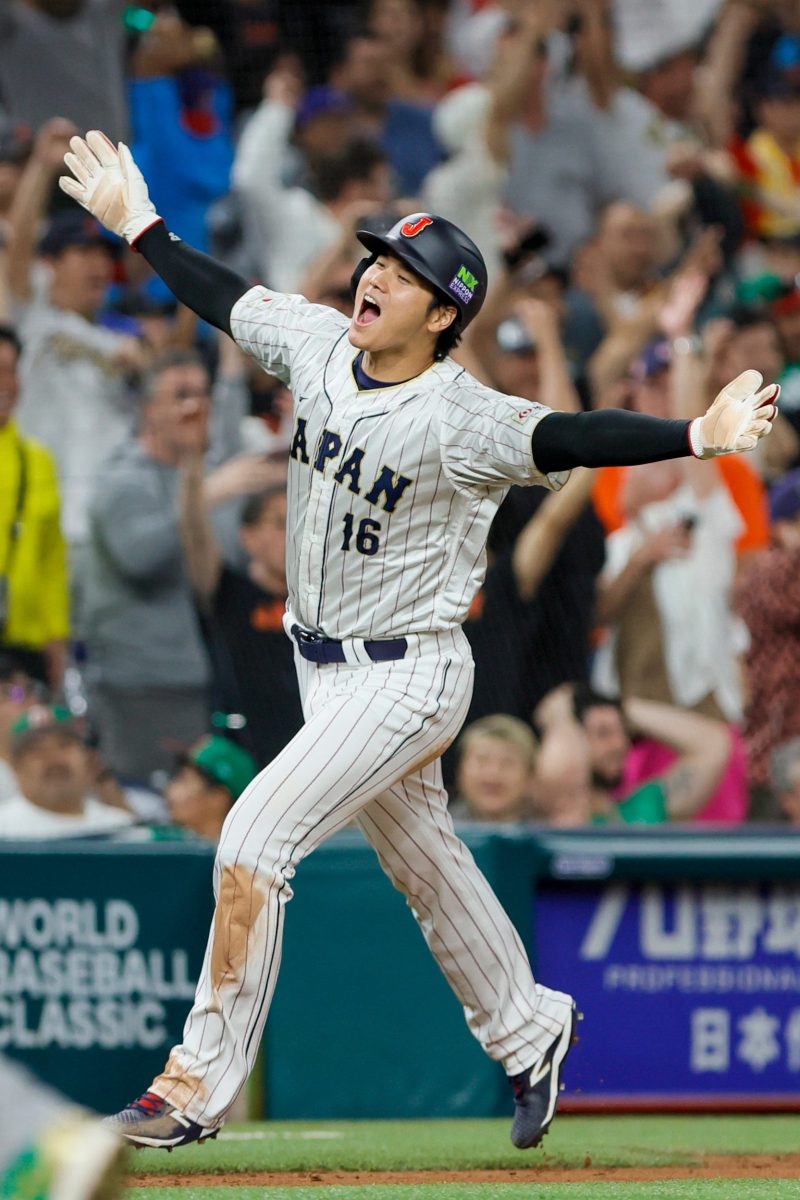
Teams competing in the World Baseball Classic have a most delicate task: Carve out a legacy in less than two weeks.
Yet despite the microwaved format that’s inverse to how we typically watch the sport and assess greatness, the five championship teams all managed to both showcase their talents, conserve their resources and suppress some pretty elite competition to hoist the trophy at tournament’s end.
The WBC has changed almost as much as the sport itself in two decades. Ranking the best of the best is certainly a dicey proposition, as several mini-eras have emerged in the game during that span.
Still, some squads shined a bit brighter. With that, ranking the five WBC champions as the 2026 edition gets under way March 5:
5. Japan 2006
Record: 5-3, 60-21 run differential
Pool play: 2-1 (Lost to Korea 3-1, beat China 18-2, beat Chinese Taipei 14-3)
Second round: 1-2 (Lost to Korea 2-1, lost to USA 4-3, beat Mexico 6-1, advanced on tiebreaker among USA, Mexico, Japan).
Semifinals: Beat Korea 6-0.
Final: Beat Cuba 10-6
Star power: Daisuke Matsuzaka – one year away from making the leap from Japan to the Boston Red Sox for a total commitment of $103 million – won all three of his starts, giving up three earned runs in 13 innings, a 1.38 mark, striking out 10. Ichiro Suzuki showed he was still in the peak of his MLB career, ripping 12 hits in 33 at-bats and producing a .964 OPS.
And while Koji Uehara was most renowned stateside as a reliever, including with the 2013 champion Red Sox, he was a dominant starter then, having won 20 games as a 24-year-old in 1999. In this WBC, he was unbeaten in three starts with 16 strikeouts to zero walks. Uehara avenged Japan’s two previous losses to Korea, pitching seven shutout innings with eight strikeouts in the semifinals.
Championship: Matsuzaka tossed four innings of one-run ball while Suzuki reached base three times and scored three runs to subdue Cuba.
Legacy: They’re the lone WBC champ to suffer three losses, dampening the ledger a bit. Yet it was a harbinger for the next decade in the game, as Matsuzaka, Nori Aoki and Aki Iwamura went on to populate our TVs in subsequent Octobers.
4. Dominican Republic 2013
Record: 8-0, 36-14 run differential
Pool play: 3-0 (Beat Puerto Rico 4-2, beat Spain 6-3, beat Venezuela 9-3)
Second round: 3-0 (Beat Italy 5-4, beat USA 3-1, beat Puerto Rico 2-0)
Semifinals: Beat Netherlands 4-1
Finals: Beat Puerto Rico 3-0.
Star power: Robinson Cano, on a fast track to Cooperstown at the time, banged out 15 hits, two homers and a 1.296 OPS. Nelson Cruz and Jose Reyes contributed 10 and 11 hits, respectively while Hanley Ramirez, 29, and Carlos Santana, 27, each hit a pair of homers. Even 39-year-old Miguel Tejada put up a .316/.350/.368 line.
Hard to believe the lone unbeaten champ in WBC history called upon Sam Deduno as its ace, but he gave up one earned run in 13 innings (0.69 ERA) of three starts. Edinson Volquez also started three games but struggled, striking out nine but walking six. That’s OK – the bullpen was heroic. Fernando Rodney – who saved seven of their eight wins – Pedro Strop, Santiago Casilla, Octavio Dotel and Kelvin Herrera gave up zero runs and 11 hits across 28 innings.
Championship: Deduno pitched five shutout innings against a Puerto Rico lineup with 36-year-old DH Carlos Beltran and Yadier Molina in the middle, but precious little else. And, of course, Dotel, Strop and Casilla combined for four innings of one-hit, no-run relief.
Legacy: It’s tough to argue with an unbeaten squad, and the bullpen managed to hold down the fort. But the lack of a true No. 1 – and the tepid opponent they faced in the final – downgrades the Dominicans just a bit here.
3. USA 2017
Record: 6-2, 41-21 run differential
Pool play: 2-1 (Beat Canada 8-0, lost to Dominican Republic 7-5, beat Colombia 3-2)
Second round: 2-1 (Beat Venezuela 4-2, lost to Puerto Rico 6-5, beat Dominican Republic 6-3.
Semifinals: Beat Japan 2-1
Finals: Beat Puerto Rico 8-0
Star power: The home team finally got one, though it was due in large part to high-end grinders rather than superstars. Shortstop Brandon Crawford and Eric Hosmer each had 10 hits and OPSes north of 1.000. Christian Yelich scored a team-high seven runs. And the consensus starting squad had Gold Glovers (Buster Posey, Hosmer, Ian Kinsler, Crawford, Nolan Arenado, Adam Jones, Yelich, Andrew McCutchen) at every position.
Marcus Stroman carried, starting three games, pitching 15 1/3 innings with a 2.35 ERA and 0.91 WHIP. Danny Duffy started and won two games, including the must-win quarterfinal against the Dominicans. Luke Gregerson and Pat Neshek combined for nine innings of scoreless relief.
Championship: Stroman pitched six innings of one-hit ball, while Kinsler – who also homered – Yelich, Arenado, McCutchen and Giancarlo Stanton each had two-hit games. Puerto Rico started Seth Lugo and had a star-studded lineup compared to its 2013 finalists: Francisco Lindor, a young Carlos Correa, Beltran, Molina and Javy Baez.
Legacy: This team remains the only group that beat all the Latin American powers – Venezuela, the Dominican Republic and Puerto Rico – as well as Japan to win it all. And this WBC marked a turning point, with Jones’ home run robbery of Manny Machado in the quarterfinals at Petco Park turning it into a can’t-miss event.
2. Japan 2009
Record: 7-2, 50-16 run differential
Pool play: 2-1 (Lost to Korea 1-0, beat Korea 14-2, beat China 4-0)
Second round: 3-1 (Beat Cuba 6-0, lost to Korea 4-1, beat Cuba 5-0, beat Korea 6-2)
Semifinals: Beat Venezuela 10-2
Finals: Beat Korea 5-3
Star power: Perhaps the apex of Japanese talent, both old and new. Suzuki banged out 12 more hits and scored seven runs, and Aoki also had a dozen hits and drove in seven. Catcher Kenji Johjima never found stardom with the Seattle Mariners but had a 10-for-30 WBC with a home run.
Meanwhile, Matsuzaka was back, as he posted a 2.86 ERA and Japan won all three of his starts, but this time he had company. Yu Darvish, the 22-year-old who was still three years away from debuting with the Texas Rangers, struck out 20 in 13 innings with a 1.000 WHIP. And Hisashi Iwakuma, who won 63 games in six seasons with the Mariners, posted a 1.35 ERA in three starts an a relief appearance.
Final vs. Korea: Iwakuma pitched four-hit ball into the eighth and Suzuki had four hits, including a two-out, two-strike two-run single in the top of the 10th inning off Chang Hong Lim, giving the WBC a thrilling finish that wouldn’t be matched for 14 years.
Legacy: Let it be known that the Japanese WBC squads of the aughts struggled mightily with Korea. But they were more or less unbeatable otherwise and this team’s pitching depth separates it from almost all the champions.
1. Japan 2023
Record: 7-0, 56-18 run differential
Pool play: 3-0 (Beat Korea 13-4, beat Czechia 10-2, beat Australia 7-1)
Quarterfinals: Beat Italy 9-3
Semifinals: Beat Mexico 6-5
Finals: Beat USA 3-2
Star power: Might be oversimplifying it to say any team with Shohei Ohtani is a default No. 1. Yet he truly never disappoints. Ohtani led Japan with 10 hits and 10 walks, produced a 1.345 OPS and, on the mound, a 1.86 ERA in winning both his starts and adding his epic relief strikeout of Mike Trout to end the championship. Munetaka Murakami – catch him on Chicago’s South Side this spring – produced an .845 OPS while American-born Lars Nootbaar posted a .424 OBP.
Future Los Angeles Dodgers teammate Yoshinobu Yamamoto had his international coming-out party, striking out 12 in 7 1/3 innings. The youngsters – Shota Imanaga, Rōki Sasaki and Yamamoto – ensured that Darvish, now 36, could get hit a little harder and Japan survived it.
Final vs. USA: Ohtani’s strikeout of Trout was the Polaroid moment; home runs from this year’s spring curiosities – Murakami and Kazuma Okamoto of the Toronto Blue Jays – pushed them toward victory. Kyle Schwarber got Team USA within 3-2 with a solo homer, but that only made Ohtani’s heroics all the more necessary.
Legacy: It’s debatable whether this squad is deeper overall than the 2009 edition; it will take a few seasons to gauge Murakami and Okamoto’s MLB production to further contextualize the talent. But any team with Ohtani already has a massive edge – and he proved it emphatically.
The USA TODAY app gets you to the heart of the news — fast. Download for award-winning coverage, crosswords, audio storytelling, the eNewspaper and more.