
Indiana’s recent championship marks the first time a new program has won a national title since 1996.
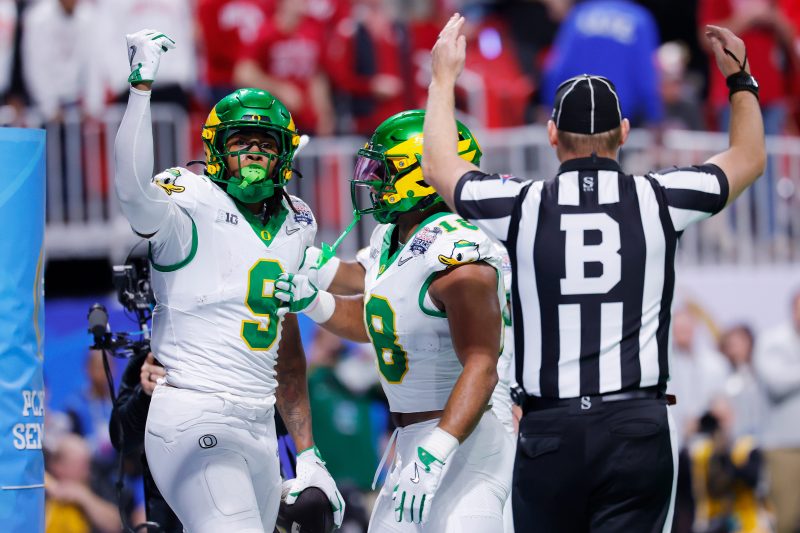
Oregon is considered the most probable contender, having recently reached the playoff semifinals.
Factors like NIL investments, transfer portal success, and conference stability are key to a team’s championship potential.
Beating Miami in the College Football Playoff championship made Indiana the Bowl Subdivision’s first first-time national champion since Florida in 1996.
Since the start of college football’s modern era in 1936, only 31 programs have now won at least one officially recognized national title by finishing atop either the final US LBM Coaches Poll or Associated Press poll.
While Brigham Young was part of the defunct Western Athletic Conference when it won the title in 1984, every champ of the modern era is currently a member of a Power Four league.
That leaves 37 Power Four programs without this piece of hardware. The Hoosiers’ rapid turnaround has every one of these teams thinking: Why not us?
Of this group, these 10 programs are the most likely to join Indiana as first-time champs:
1. Oregon
Oregon has been knocking on the door of a national title starting this century, and even played for all the marbles in 2010 and 2014. The Ducks have gone a combined 26-3 since joining the Big Ten, showing their adaptability and staying power, and advanced to the playoff semifinals this season after getting bumped from last year’s quarterfinals. With Dante Moore back for his junior year, Oregon’s time may come as soon as 2026.
2. Texas Tech
Major investments in talent acquisition and roster management have made Texas Tech one of the fastest risers of the NIL and transfer portal era. The Red Raiders took a big leap this past year in capturing the program’s first outright conference title since 1955, and after another top-ranked transfer haul will enter the 2026 season as the unquestioned Big 12 favorite. Like the Ducks, Tech could take the next step this fall.
3. Baylor
Baylor has the resources to mirror Tech’s transfer-driven path to the playoff. Each of the Bears’ past three full-time coaches have at least played for the Big 12 crown, proving that there is a foundation in place for sustained success; consistency has been lacking, though, especially under current coach Dave Aranda.
4. Arkansas
The 1964 Razorbacks went 11-0 but finished No. 2 back when the two major polls were finalized before teams completed their seasons in bowl games. Arkansas has finished in the top six of either major poll six times since then, most recently in 2011. On one hand, the program has high expectations, a history of off-and-on success and a spot in the SEC. On the other, it’s never been harder to climb the ladder in the SEC.
5. Kentucky
Like Indiana, Kentucky is a basketball school with the financial resources to pay for an elite football roster. The Wildcats flexed their muscle with this year’s impressive transfer class, led by a major investment in Notre Dame transfer quarterback Kenny Minchey. Even more so than Indiana and Arkansas, though, Kentucky is always expected to earmark a significant chunk of NIL resources toward the men’s basketball program, leaving open the question of whether the school will ever fully fund its football team on the level needed to compete for and win an SEC title.
6. Virginia Tech
It’s been a lost 15 years for a program that played for the title in 1999 and was one of the most successful Power Four programs of the early 2000s. Hiring James Franklin and increasing its athletics budget by about $229 million over the next four years indicates Tech’s commitment to competing for ACC titles and the playoff. A wide-open and often unpredictable ACC will only help the Hokies.
7. South Carolina
Like Arkansas, South Carolina faces the challenge of scaling the SEC. The Gamecocks nearly earned an at-large bid in 2024, however, and have done a good job under Shane Beamer of landing the sort of difference-making players (LaNorris Sellers, Dylan Stewart, Nick Emmanwori) who can carry a team to the playoff. Building the depth needed to win three of four playoff games will be the Gamecocks’ biggest challenge.
8. SMU
SMU is on much firmer ground now as members of the ACC and has the right coach in Rhett Lashlee. Since joining the league, the Mustangs have earned one playoff bid in 2024 and were in the thick of this year’s conference race until the final weekend of the regular season. While the university has a much smaller alumni base than the biggest schools in Texas, SMU has the funding to retain key players such as quarterback Kevin Jennings, who could’ve triggered a national bidding war had he entered the portal after this season.
9. Louisville
Louisville played for the ACC title in Jeff Brohm’s debut and won at least nine games in each of the past two years, though the Cardinals’ conference win total has dropped from seven in 2023 to five in 2024 to four this season. While that drop is notable, the 2025 team beat Miami, lost to SMU by a point and dropped overtime games to Virginia and California. Louisville should be an ACC contender for as long as Brohm leads the program.
10. Houston
Houston’s basketball program has grown into one of the nation’s best. Could football follow the same path? The school has invested in the program by hiring Willie Fritz, who posted a six-win jump in his second season. The Cougars are also trending upwards in the Big 12, though it’ll take an even bigger financial commitment to catch up with Texas Tech atop the conference.